
Path of Exile 2 Breach Crafting Guide: How the Genesis Tree and Womb Gifts Work
In Path of Exile 2, the endgame Breach system is no longer just a frantic monster-killing mechanic—it evolves into a full narrative-driven war against an expanding alien infestation known as the Hiveborn. What begins as a familiar “kill fast to sustain the portal” encounter gradually transforms into a layered progression system involving world-altering crafting, Path of Exile 2 Currency, and large-scale domain invasions.
At the center of this redesigned experience is a mysterious order known as the Keepers of the Flame, a living crafting entity called the Genesis Tree, and a deeply interconnected loop of Breach encounters that reshape how players engage with endgame progression.
This article breaks down the full structure of this system, from your first Breach encounter to the ultimate confrontation with the Hiveborn lords and the pinnacle boss Zest.
The First Contact: Alith and the Call to the Keepers
Your journey begins in a standard endgame Breach encounter. As usual, you open a rift into another dimension filled with Hiveborn monsters pouring through the cracks of reality. But this time, something is different.
You meet Alith, one of the Keepers of the Flame—an ancient monastic order dedicated to holding back the Hiveborn invasion. These monks are not just observers of the Breach phenomenon; they are active participants in a centuries-long war against it.
Alith recognizes your efficiency in slaying demons and immediately recruits you into their cause. He requests that you travel south to their monastery, where the true scope of the conflict will be revealed.
This simple introduction does more than advance the story—it establishes the core fantasy of the system: you are no longer just farming encounters; you are joining a war effort.
Breach Evolves: Visibility, Time Pressure, and Tactical Killing
As you travel toward the monastery, you continue encountering Breaches. However, the mechanic itself has been refined in subtle but important ways.
In earlier systems (such as those seen in Path of Exile), Breaches were about rapid killing to prevent collapse. In this evolved version, players now gain clear visual feedback:
A visible timer shows exactly how long the Breach will remain open.
Each monster kill extends the Breach duration in a measurable way.
This changes the encounter from pure speed-based frenzy into a more controlled rhythm. Players can now consciously manage uptime, balancing aggression with positioning and efficiency. It becomes less about chaos and more about sustaining momentum under pressure.
The Monastery of the Keepers: A War Gone Wrong
Upon reaching the monastery, the full narrative weight of the system is revealed.
The war against the Hiveborn has lasted 25 years since the events of the original Breach conflict in Path of Exile 1. However, the situation has deteriorated. The Hiveborn have not only survived—they have established a permanent foothold in the world.
Entire regions have been consumed. The Keepers of the Flame are now in a defensive position, unable to reclaim large portions of corrupted land.
Inside the monastery lies a powerful artifact: the Genesis Tree, a living construct gifted by the Dreamer. This tree once served as a weapon of war, but it has now withered due to a lack of one critical resource: hive blood.
The Genesis Tree: A Living Crafting System
The Genesis Tree is the centerpiece of this entire system. It is not a traditional crafting bench or loot modifier—it is a biological, evolving crafting ecosystem.
To restore its power, players must feed it hive blood obtained from advanced Breach encounters. But this is not simple farming. It requires players to push Breaches into a new stabilized phase.
Stabilized Breaches and Elite Hiveborn Waves
If players keep a Breach open long enough, it transitions into a second phase:
The portal stabilizes.
Elite Hiveborn enemies spawn.
These enemies are significantly more dangerous but drop hive blood.
Occasionally, players may also encounter a rare and deadly enemy type: the Marshal of Zest, one of the Hiveborn’s most powerful war entities.
These encounters turn Breaches into mini-boss arenas, rewarding risk with essential crafting resources.
Womb Gifts: The Currency of Creation
Alongside hive blood, players collect another resource: womb gifts. These are organic crafting components dropped by Hiveborn enemies during stabilized Breaches.
Womb gifts are brought back to the Genesis Tree, where they can be used to “birth” items.
At its simplest level, a womb gift might produce:
A random rare amulet
A ring with basic modifiers
A crafted jewel catalyst
But the system quickly scales beyond randomness into controlled deterministic crafting.
The Branch System: Customizing Item Birth
The Genesis Tree is structured like a branching skill tree, where each node represents a different crafting specialization.
Players are given 15 total points to allocate, shaping the tree according to their build needs.
Key branches include:
1. Base Type Control
Allows players to influence what type of item is born:
Amulets
Rings
Specialized variants
Deeper progression unlocks entirely new base types not available in the normal game world.
Some examples include:
Amulets that grant a free Spirit skill
Items with built-in rune sockets
2. Mod Control Branches
These branches determine affix behavior:
Higher item level rolls
Guaranteed mod categories
Specific mod locking
This transforms the tree into a semi-deterministic crafting engine rather than a pure RNG system.
3. Respec Flexibility
Unlike traditional passive trees, the Genesis Tree has no respec cost. Nodes can be toggled on or off at any time, allowing players to adapt crafting strategies dynamically.
Expanding Craft Systems: Rings, Belts, and Currency Trees
The Genesis Tree system extends beyond amulets.
Rings
Rings gain entirely new mod pools, including:
Enhanced caster damage modifiers
Unleash seal generation speed boosts
Dedicated minion-oriented modifiers
This is especially significant because caster and minion builds historically had fewer strong crafting options compared to attack builds. The system closes that gap significantly.
Belts and Currency Systems
Other branches introduce:
New belt affix categories (e.g., lightning scaling bonuses)
Catalyst crafting systems for jewels
Additional currency generation pathways
Each subsystem reinforces the idea that Breach content is now deeply tied to long-term character progression.
Hiveborn Incursions: Breach Becomes a Domain War
Eventually, players acquire a womb gift capable of producing a Breach Stone, unlocking access to Hiveborn-controlled territory.
This marks the transition from isolated encounters to full invasion gameplay.
Inside these domains, the Hiveborn have reshaped reality itself:
Massive corrupted landscapes
Defensive “skyhives” floating structures
Layered enemy occupation zones
Players must systematically destroy Hive infrastructure using Keeper powers while surviving escalating resistance waves.
Skyhives and Breach Lords
Deeper into these domains lie critical objectives:
Skyhives: Large structures that anchor Hiveborn influence
Breach Lords: Elite bosses such as Tool and Ash
Destroying these structures weakens the Hiveborn foothold and unlocks progression toward domain completion.
However, these encounters scale in difficulty as destruction increases resistance, creating a push-pull dynamic between progress and survival.
Endgame Atlas Integration and Zest Pinnacle Content
After completing the main questline, Breach content expands into the Atlas system.
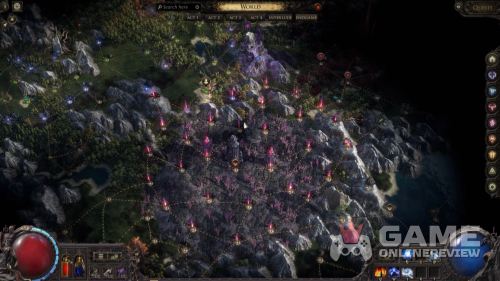
Players will encounter randomized Breach domains across the world map, each requiring:
Breach Stone activation
Skyhive destruction
Breach Lord elimination
Completing these unlocks access to the ultimate encounter: Zest, the Breach Pinnacle Boss.
Zest is accessible through communion with the Dreamer inside the monastery, serving as the ultimate test of mastery over the system.
The Breach Atlas Tree: Strategic Endgame Customization
As players progress, they earn points in a dedicated Breach Atlas Tree. This adds another layer of strategic depth.
Examples include:
Spawning Breach Hives outside normal domains
Enhancing Alith’s combat abilities
Increasing monster difficulty for higher rewards
Controlling womb gift drop types
Modifying Genesis Tree effects
Some nodes even introduce permanent world changes, such as special drops tied to Zest or unique biological growths on the Genesis Tree buy Path of Exile 2 Currency.
Conclusion: A Living Endgame System
The Breach system in Path of Exile 2 represents a major evolution in ARPG endgame design. It blends:
Fast-paced combat encounters
Persistent narrative progression
Deep deterministic crafting systems
Large-scale invasion zones
Branching long-term character development
What begins as a simple portal defense mechanic becomes a full war simulation against an expanding alien intelligence, anchored by a living crafting ecosystem that grows alongside the player.
In doing so, it transforms Breach from a repeatable encounter type into one of the most structurally ambitious systems in the game’s entire endgame framework.